Biometric Verification in Industrial Safety: Why It Matters for Permit Compliance
Eliminate informal worker substitution, enforce real-time certification checks, and guarantee identity assurance at the point of high-risk permit execution.
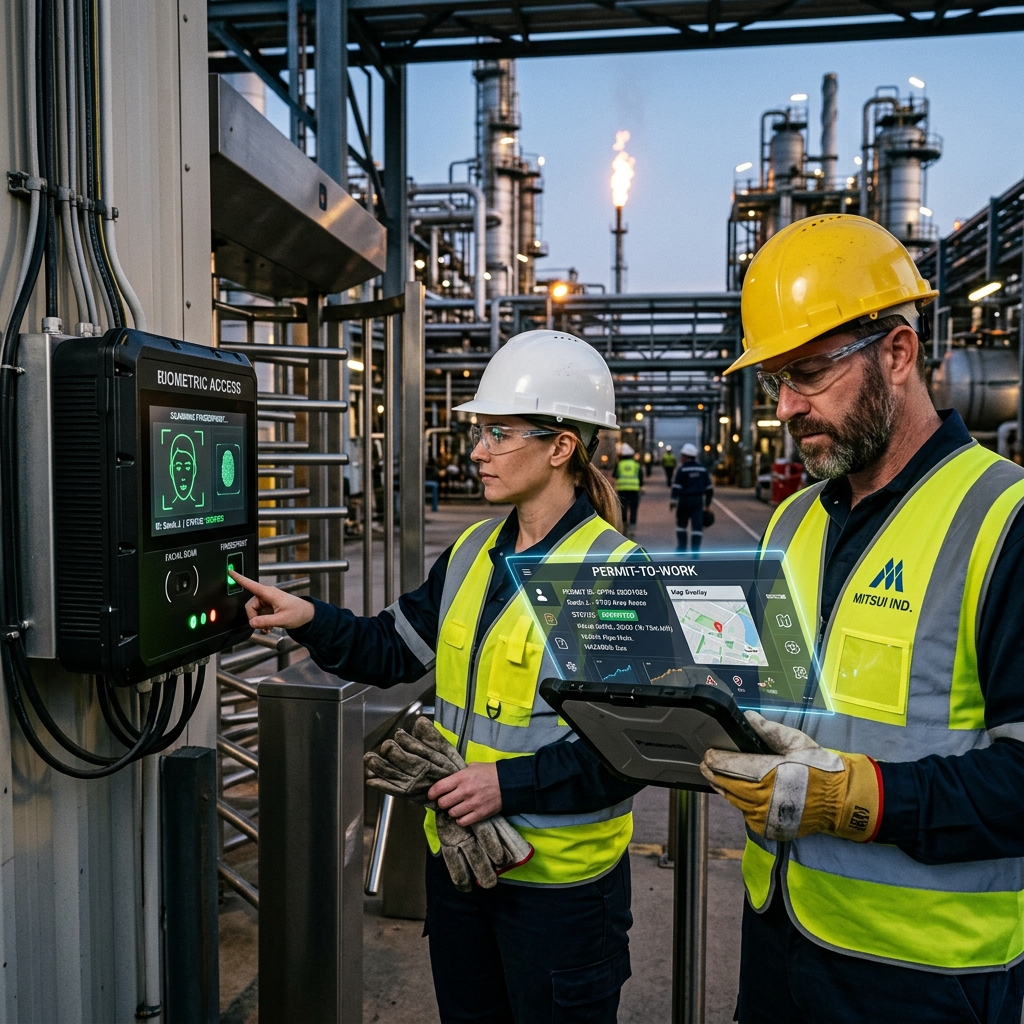
The Identity Gap in Traditional Systems
Manual sign-in sheets and ID badge checks rely on an honesty assumption: that the person signing in, or holding the badge, is who they claim to be. On busy multi-contractor sites — with high turnover, temporary labor, and shift changes — this assumption breaks down more often than most safety programs account for.
The practical risk isn't usually malicious impersonation; it's more often informal substitution — a worker asking a colleague to "cover" a shift, or a supervisor allowing an uncertified worker to fill a gap under time pressure. Either way, the permit's assumption that a specific, certified person is doing the work no longer holds.
Informal substitution compromises permit validity. A badge scan confirms only that a card was scanned — not that the qualified, certified individual is physically present on site.
What Biometric Verification Actually Confirms
Biometric verification — typically fingerprint or facial recognition tied to a worker's digital record — confirms three critical points right at site access or permit assignment:
1. Verified Identity
This is the specific individual on record, completely eliminating informal proxy check-ins or substitute workers.
2. Certification Validity
This individual's safety training, medical clearances, and trade certifications are current for the specific task being assigned.
3. Presence Timestamp
This individual was physically verified at this location and time — creating a defensible record for both safety and attendance purposes.
This is a meaningfully stronger guarantee than a badge scan or manual sign-in, which confirm only that a badge or name was recorded — not that the right, qualified person is actually present.
Where It Fits in the Permit-to-Work Process
Biometric verification is most valuable when tied directly into permit approval and execution, not run as a standalone attendance system:
- At permit assignment: Confirming the workers listed on a permit are the ones actually verified on-site, with current certifications.
- At site entry: Creating a timestamped record of who entered a work area and when, useful for both safety monitoring and incident investigation.
- At shift handover: Verifying the correct crew is present for work continuing across shifts, reducing handover confusion.
When this data lives in the same system as permit records, an approver or auditor can answer "who was actually doing this work, and were they certified?" directly from the permit record — rather than cross-referencing a separate attendance system after the fact.
Implementation Considerations
- Device reliability in industrial conditions: Biometric scanners need to function reliably with gloves, dust, or PPE common in industrial settings — not every consumer-grade device is suited to this environment.
- Data privacy and consent: Biometric data is sensitive; implementation should include clear worker consent processes and secure storage aligned with applicable data protection requirements.
- Fallback processes: Have a defined manual verification fallback for scanner downtime or edge cases, so site operations don't stall entirely if a device fails.
- Integration with existing systems: Biometric verification delivers the most value when connected to permit and certification records, rather than operating as an isolated attendance log.
Frequently Asked Questions (FAQ)
Is biometric verification required by regulation for permit-to-work systems?
Requirements vary by jurisdiction and industry; biometric verification is generally a best-practice control for identity assurance rather than a universal regulatory mandate, though some high-risk sectors are moving toward stricter identity verification standards.
What happens if a worker's biometric scan fails on-site?
A well-designed system should have a defined fallback verification process (such as supervisor-confirmed manual check-in) so a single device or scan failure doesn't halt operations.
Does biometric data need special handling for privacy compliance?
Yes. Biometric data is sensitive personal data in most data protection frameworks and should be collected with clear consent and stored securely, separate from general attendance records where possible.
Can biometric verification reduce contractor billing disputes?
Yes — by tying verified presence directly to authorized, permitted work, it reduces disputes over whether billed hours correspond to actual, authorized time on-site.
Enterprise-Grade Industrial Solutions
PermitSync ties biometric worker verification directly into permit assignment and approval, giving unambiguous confirmation of certifications and presence at the job site. Learn more about PTW Implementation and Integration Services.
Ready to replace permit chaos with operational control? Bring permits, approvals, workforce readiness, and attendance tracking into one modern industrial workflow.
Book a Consultation