The Hidden Cost of Paper: Why Manual Permit-to-Work Systems Hold Your Plant Back
In heavy industries like steel plants, chemical refineries, or power hubs, safety and efficiency are two sides of the same coin. When a production line stops, whether for planned maintenance or a sudden breakdown, you lose revenue by the minute.
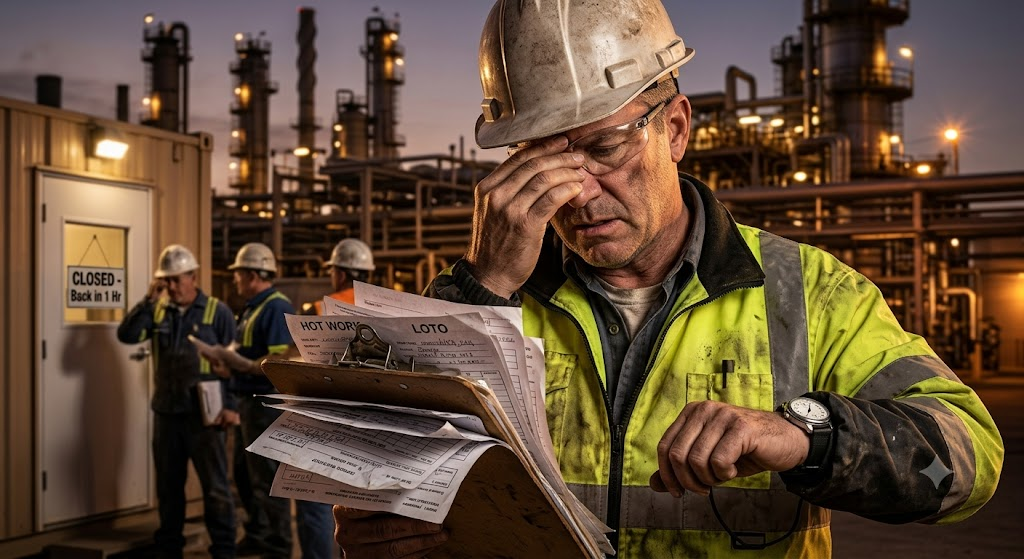
Paper Feels Familiar, But It Carries Hidden Risk
Even in a world where supply chains are fully digital, many plants still rely on carbon-copy paper, clipboards, and long walks to get maintenance work approved. Paper may feel comfortable to teams, but it slows operations, creates blind spots, and puts workers at risk.
Let us look at the real costs of manual Permit-to-Work (PTW) systems and why they hold your plant back.
A paper permit is not just a form. It is often the first bottleneck between a stopped asset and a safe return to production.
The "Walking Bottleneck" That Drains Tool Time
Think about how a standard paper permit for high-risk hot work happens. A supervisor fills out a physical form at the job site, then walks across the plant to find the area manager. If that manager is in a meeting, the supervisor waits.
Next comes the gas test. The supervisor coordinates with a safety officer, who logs results on a separate sheet and physically staples it to the permit. Finally, the supervisor walks back to the main office for a final signature.
- The reality: This game of telephone eats up massive chunks of the day just to authorize a single complex permit.
- The compounded loss: When skilled supervisors waste hours on administrative legwork, your plant loses momentum and wrench time drops.
The Visibility Blindspot: Operating in the Dark
When a permit is just a piece of paper on a clipboard at Turbine Line 3, it is invisible to the rest of the facility. Plant leaders and control room operators have no real-time way of knowing who is working where.
Why a lack of centralized visibility is dangerous:
- SIMOPS conflicts: If one crew gets a paper permit for welding beside a pipe system that could leak flammable gas, the system relies entirely on human memory to catch the danger.
- Emergency delays: If you need to evacuate, safety teams cannot instantly see how many contractors are inside a confined space versus how many made it out safely.
The Nightmare of Audits and Lost Archives
Industrial plants face strict regulatory audits. Inspectors do not just care about today. They want proof that you operated safely six months ago.
Digging through damp, messy filing cabinets for an old permit is a logistical nightmare. Paper gets lost, ink fades, and isolation checklists go missing. If an auditor finds a missing signature, your plant faces immediate penalties, shutdowns, and severe reputational damage.
The Solution: A Modern Digital Safety Backbone
Moving from a manual system to a digital permit-to-work system dramatically speeds up permit approval cycles. It replaces paper chasing with an automated queue.
Transitioning to a digital ecosystem like PermitSync optimizes your plant's velocity and changes how your frontline operates:
- Automated validation: The system will not let anyone submit a permit unless every checklist, gas test, and PPE requirement is completed and digitally signed.
- Instant notifications: Approvers get high-priority alerts on mobile devices, letting them review and sign off from wherever they are on the plant floor.
- Permanent digital trails: Every modification and sign-off receives a secure audit trail, making audit preparation far simpler.
FAQ: Manual vs. Digital Permit Systems
How does a digital permit-to-work system improve wrench time?
A digital system removes the need for supervisors to walk across the plant floor to hunt down managers for physical signatures. Permits are submitted, reviewed, and approved through mobile devices, keeping technicians on the tools instead of stuck in paperwork.
Can a digital PTW system prevent Simultaneous Operations (SIMOPS) conflicts?
Yes. Unlike paper permits trapped on local clipboards, a digital PTW system uses a live, centralized dashboard. It can flag conflicting high-risk activities, such as welding near a potential gas leak, before the permit is issued.
Will moving to digital make safety audits easier?
Yes. Every permit, signature, and gas test reading is recorded with a secure digital trail, so teams can export complete histories without hunting through paper archives.
Reclaim your plant's efficiency today
Stop losing valuable wrench time to manual bottlenecks and administrative friction. Transition your facility to a unified digital architecture that keeps your frontline moving safely and your audits stress-free.
Book a live demo