5 Pillars of Effective Industrial Contractor Safety Management
Contractors represent a vital portion of the workforce in modern manufacturing plants, processing facilities, and construction sites. However, managing third-party contractor safety presents unique challenges. Contractors are often unfamiliar with site-specific hazards, plant layouts, and internal safety protocols, making contractor oversight one of the highest EHS priority areas.
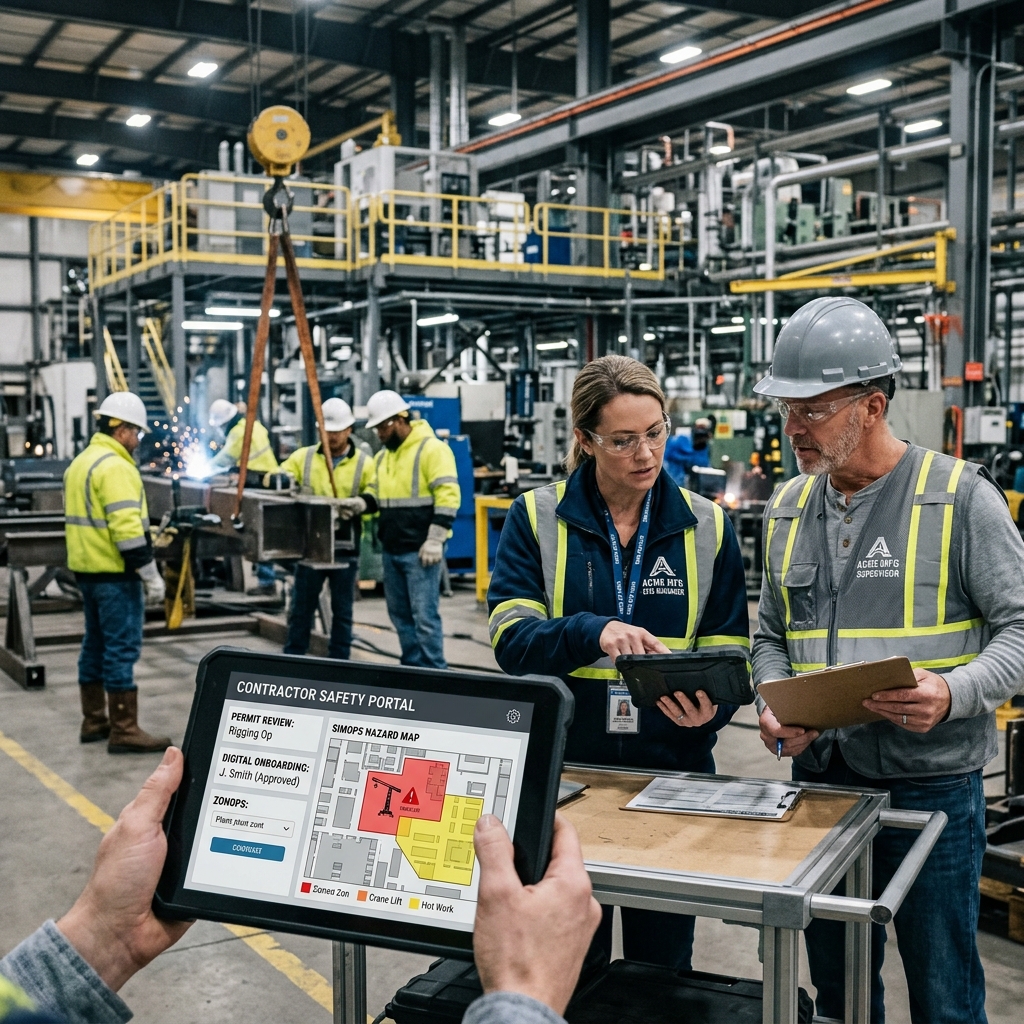
To maintain a zero-incident culture, industrial leaders must implement a proactive contractor safety management framework. Here are the 5 critical pillars every plant manager and EHS leader should implement.
1. Pre-Qualification and Onboarding Standardization
Safety management begins long before a contractor sets foot on your plant floor. Evaluating contractor safety performance during the procurement stage minimizes baseline risk.
- EHS Scorecards: Assess contractors based on historical incident metrics (TRIR/EMR), past regulatory compliance, and safety certifications.
- Digital Onboarding: Transition from manual classroom inductions to digital pre-site orientation modules that cover core hazard awareness and emergency evacuation plans.
2. Automated Gate Access and Certification Matching
A major vulnerability in industrial facilities is untracked or under-qualified third-party personnel entering high-hazard zones.
Integrating contractor management with digital gate access ensures that:
- Only contractors with active, verified inductions gain site entry.
- Specific trade certifications (e.g., certified welders, high-voltage electricians, scaffolders) are verified before work permits are generated.
- Expired medical or safety credentials trigger automatic access restrictions.
Automated credential matching prevents un-inducted or uncertified workers from being issued permits for high-risk zones.
3. Dynamic High-Risk Work Permitting & LOTO Tracking
Contractors frequently perform high-risk tasks such as working at height, confined space entry, or hot work. Managing these activities through ad-hoc verbal agreements or paper forms introduces severe risk.
- Mandatory Permit Verification: Every high-risk job must trigger a structured Permit to Work (PTW) workflow.
- Lockout/Tagout (LOTO) Integration: Ensure strict hazardous energy isolation protocols are digitally logged and verified by both site engineers and contractor supervisors before maintenance begins.
4. Active Field Monitoring and SIMOPS Coordination
Even well-planned work can encounter unexpected hazards when multiple contractor teams operate in close proximity—known as Simultaneous Operations (SIMOPS).
- Use centralized digital site maps to track active work zones.
- Conduct joint safety walk-throughs and log digital safety observations or near-misses instantly via mobile apps.
- Implement automated alerts if one team's activity introduces a hazard to an adjacent contractor crew.
5. Data-Driven Contractor Performance Reviews
Contractor safety management shouldn't end when a project finishes. Post-job evaluations build long-term safety accountability.
Track key performance indicators (KPIs) such as:
- Permit compliance rate and safety audit scores.
- Near-miss report participation.
- Adherence to PPE standards and site housekeeping rules.
Maintaining a centralized contractor database allows your EHS team to reward top-performing vendors and address non-compliant behavior before re-engaging contractors for future shutdowns or capital projects.
Frequently Asked Questions (FAQ)
Q1: Why is contractor safety management more challenging than managing internal workforce safety?
Contractors are often unfamiliar with site-specific hazards, plant layouts, and internal EHS protocols. Because they move between different industrial environments, maintaining consistent safety compliance, tracking certifications, and ensuring alignment with company-specific permit workflows requires structured digital oversight.
Q2: How does a digital Permit to Work (PTW) system improve contractor oversight?
A digital PTW system automates credential verification before permits are issued, ensuring third-party workers hold valid safety training, medical clearances, and trade certifications. It also provides real-time site visibility and automated SIMOPS (Simultaneous Operations) conflict detection to prevent hazards when multiple contractor teams operate in the same area.
Q3: What key metrics should EHS leaders track to evaluate contractor safety performance?
Plant managers and EHS directors should monitor permit compliance rates and audit scores, safety induction completion and badge/credential expiration status, near-miss reporting and active hazard identification participation, and LOTO (Lockout/Tagout) isolation protocol adherence.
Q4: How can plants prevent un-certified or un-inducted contractors from entering high-risk zones?
By integrating digital contractor management platforms like PermitSync with site gate access control or biometric systems. The platform automatically verifies worker orientation status and active permit approvals before granting entry to specific plant zones.
Digitize Industrial Contractor Workflows
💡 Struggling with paper permit delays and unverified contractor entry? Discover how PermitSync digitizes site safety workflows and enforces compliance across all third-party operations.
Book a Consultation