Mastering SIMOPS: How Digital Permit-to-Work Systems Defuse Co-Located Hazards
In high-hazard environments, a plant is a living puzzle. One crew replacing high-pressure valves while another conducts hot-work grinding right below them—separately routine, simultaneously catastrophic.
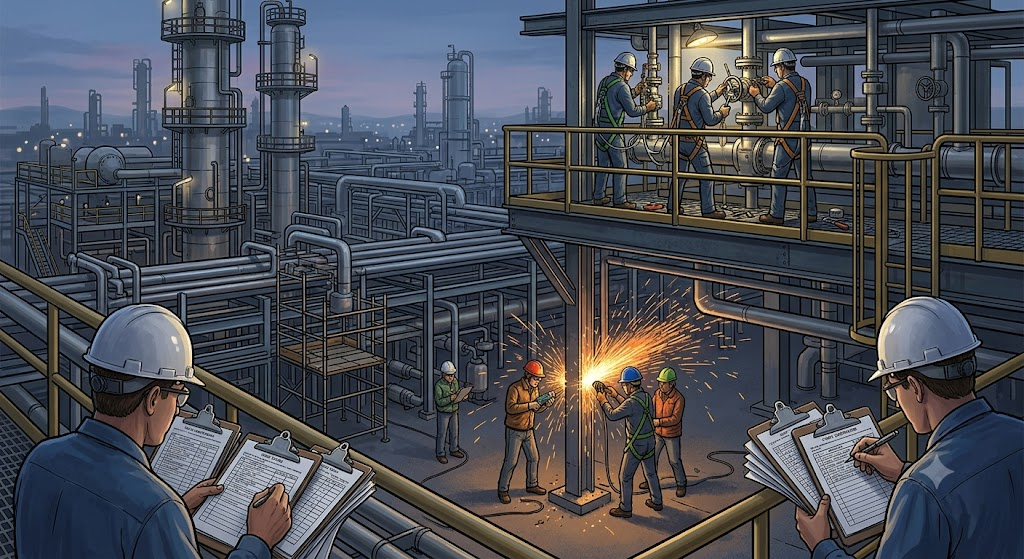
The Danger of the Structural Blindspot
Simultaneous Operations (SIMOPS) pose one of the most severe coordination challenges that plant managers face. When hundreds of permits are issued across large industrial facilities—chemical processing complexes, metallurgy units, and upstream oil facilities—tracking who is doing what and where becomes impossible on paper.
Relying on human memory to cross-reference multiple paper clipboards leaves your workforce exposed to extreme risk. Relying on chance to prevent these disasters is a critical gamble.
Paper workflows do not talk to each other. They operate in silos—dangerous interactions are only caught if an experienced area operator happens to look at both pieces of paper at the exact same moment.
Why Paper Permits Fail
Consider the vulnerability of a traditional manual setup:
- The Routine Task: A supervisor drafts a cold-work permit for line breaking on a solvent pipe.
- The Co-located Risk: Simultaneously, another team miles away receives clearance for electric arc welding on an adjacent support pillar.
- The Safety Blindspot: Because both permits sit as isolated paper sheets on different desks, nobody notices the overlapping work locations.
If that solvent line releases residual flammable vapor while the welding arc is live, the lack of real-time spatial awareness transforms a standard maintenance routine into an emergency evacuation event.
How Digital PTW Prevents SIMOPS
Transitioning to a digital permit-to-work platform changes your safety landscape from reactive to proactive. Instead of physical files filed in folders, every active, pending, and scheduled permit is linked directly to a precise geographic zone or equipment tag within a centralized database.
A modern digital permit to work system reduces SIMOPS risks using three protective layers:
Automated Spatial Alerts
The moment a supervisor inputs a hot-work request in a zone where an active chemical isolation exists, the system automatically triggers a critical alert and halts the permit until safety coordinators review the spatial conflict.
Interactive GIS Dashboards
Control room operators see a live, color-coded visual map of the facility—identifying high-risk clusters, active confined space entries, and adjacent maintenance tasks at a glance.
Integrated Isolation Guardrails
Digital PTW software natively syncs with LOTO structures. If a safety boundary is altered or unlocked, the system cross-references all active permits in that zone, alerting field crews long before live energy can reach an open work front.
Why PermitSync
Heavy industrial facilities require a reliable ecosystem that leaves zero room for oversight. PermitSync bridges the gap between field execution and control room oversight by providing a dynamic conflict matrix that evaluates scheduling and spatial data in real time.
By upgrading to PermitSync, plants unlock immediate business benefits:
- Faster permit approvals: Eliminates administrative bottlenecks so teams can safely initiate high-priority maintenance.
- Less downtime: Smoothly schedules parallel operations without creating dangerous environment overlaps that halt production.
- Improved audit readiness: Digital footprints ensure every hazard assessment, LOTO boundary, and sign-off is logged securely.
- Better compliance: Built-in safeguards stop conflicting permits from being issued, driving a dramatic improvement in compliance rates.
FAQ: Automated SIMOPS and Spatial Risk Management
What exactly constitutes a SIMOPS conflict in an industrial environment?
A SIMOPS conflict occurs when two or more potentially incompatible maintenance or operational tasks are performed within the same physical or geographical area. For example, performing radiography testing (which introduces radiation risks) in the same structural section where mechanical technicians are actively working creates a direct conflict.
How does a digital permit to work system flag a SIMOPS conflict automatically?
When a permit is generated in a digital system like PermitSync, the user must select a specific equipment tag, zone, or plant sector. The software's built-in rule matrix constantly cross-references these selections against all active and pending permits. If an incompatible pair of activities is detected in the same or adjacent zone, the system generates an immediate warning and halts issuance until authorized clearance is given.
Can control room operators override an automated SIMOPS alert?
The system can be configured based on your corporate risk matrix. Minor warnings can be cleared with documented mitigation notes, but high-risk conflicts require designated senior managers to provide multi-factor digital signatures, ensuring complete accountability.
See real-time SIMOPS visualization in action
Eliminate safety blind spots with PermitSync's dynamic conflict matrix. Book a live demo and discover how automated spatial alerts protect your workforce and your plant.
Book a Live Demo