Deskless and Connected: Why Mobile-First PTW is the Future of Frontline Safety
The vast majority of your plant's workforce doesn't sit behind a desk. They're on pipe racks, inside boiler vessels, or deep within electrical switchrooms—yet traditional safety systems force them to act like office administrators.
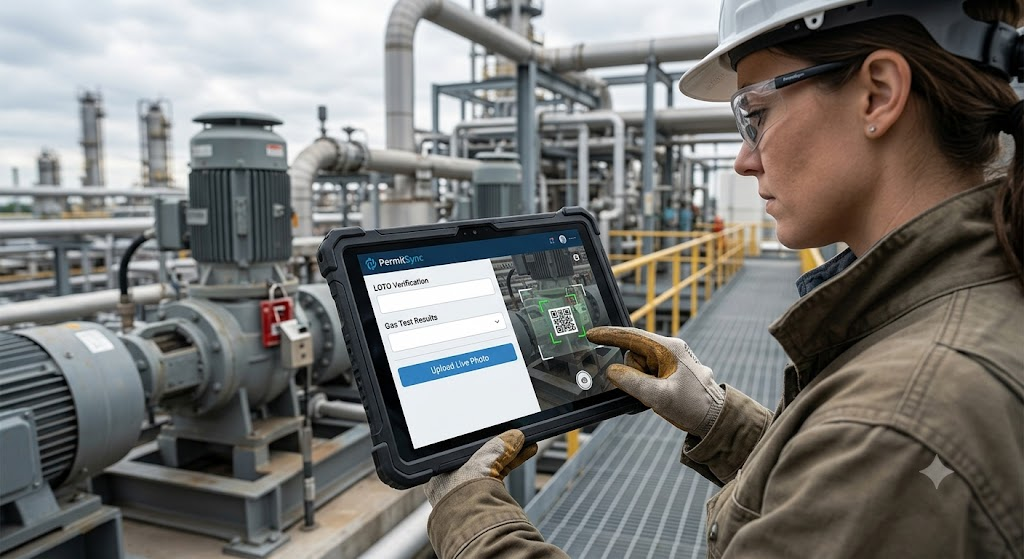
The Deskless Worker Problem
Traditional safety systems often force frontline workers to act like office administrators. They waste time walking long distances to collect signatures, filling out redundant paperwork on clipboards, and waiting in line outside the safety coordinator's office.
When safety processes feel like a bureaucratic chore, compliance drops. Frontline workers want to get their tools out and fix assets, not chase paper. To build a true culture of safety, your digital permit to work system must meet your technicians exactly where they work: on the plant floor, via mobile devices.
When safety processes feel like a bureaucratic chore, compliance drops. Your PTW system must meet technicians exactly where they work.
Benefits for Plant Managers
For plant managers, safety management is a balancing act between mitigating operational risks and maintaining productivity targets. Adopting a mobile safety ecosystem yields undeniable operational advantages—specifically a massive reduction in PTW processing time.
- Reduced paperwork: Shifts field technicians away from filling out carbon sheets and managing physical binders.
- Increased productivity: Saves hours previously lost to manual verification walks, converting administrative waste into direct wrench time.
- Better compliance: Ensures hazard checklists are executed right at the tool site, rather than guessed at from a distant office desk.
Crushing the Administrative Friction That Slashes Wrench Time
Imagine a maintenance technician discovering an unexpected seal leak on a transfer pump. In a manual process, repairing this small fault requires leaving the tools behind, hunting down a physical permit booklet, filling out carbon sheets, and embarking on a walk to find an authorized safety sign-off.
By the time the permit is physically validated and signed, hours of potential production time have vanished and tool time has plummeted.
A mobile-first system turns this on its head. Using a secure rugged tablet or mobile phone, the supervisor initiates the required permit directly at the pump site. Asset data pulled instantly via QR code scan pre-populates the form with correct isolation boundaries, hazards, and required PPE—eliminating transcription errors and slashing permit creation time to minutes.
Closed-Loop Field Verification
Mobile-first safety software doesn't just make work faster—it makes verification significantly more robust. Paper permits allow for "desk-bound approvals," where a manager signs a checklist without verifying actual site conditions. Mobile connectivity introduces true accountability:
Live Photo Uploads
Field technicians upload time-stamped images of gas detector readings, lockbox placements, or scaffolding safety hooks before the system allows work to commence.
Geofenced Sign-Offs
GPS and localized asset tagging ensure hazard assessments are conducted at the actual job front, preventing remote approvals from comfortable offices far from the risk zone.
Offline Functionality
Industrial environments often have thick concrete walls or remote tank farms where wireless networks fail. PermitSync stores safety data locally on the device and syncs automatically when connectivity is restored.
Why PermitSync
PermitSync brings enterprise asset protection straight to the frontline worker's pocket. It eliminates the administrative clutter that leads to manual shortcutting while maintaining strong safety standards. By integrating mobile workflows, industrial operators realize immediate business benefits:
- Faster permit approvals: Field-based digital signatures keep teams working efficiently without delays.
- Less downtime: Breakdowns are addressed swiftly because permits are cleared in minutes rather than hours.
- Improved audit readiness: Time-stamped, unalterable digital tracking logs for internal and regulatory reviews.
FAQ: Mobile-First Permit-to-Work Execution
Does a mobile-first digital permit to work system function in remote areas without data network coverage?
Yes, enterprise-grade platforms like PermitSync feature full offline capabilities. Field operators can fill out checklists, sign off on gas tests, and review risk assessments without a network connection. The encrypted data is securely stored on the mobile device and automatically uploads to the central dashboard as soon as the tablet or mobile connects to Wi-Fi or cellular service.
How do technicians sign off on mobile permits securely to prevent forgery?
Mobile systems replace messy pen signatures with secure digital identities. Workers log in using unique biometric verification (like fingerprint scans) or personalized PIN codes. Every single action, modification, and sign-off is logged with an unalterable timestamp and user ID link.
Will frontline workers find it difficult to transition from paper to a mobile app?
PermitSync is engineered with an intuitive, field-tested interface that mimics familiar consumer application logic. By replacing complex text fields with clear dropdown choices, tap-to-verify checkboxes, and visual icon maps, field adoption is rapid and requires minimal formal training.
Empower your field teams with mobile-first safety
Request a live PermitSync demo and discover how mobile-first PTW apps drive zero-harm compliance and maximize tool time across your plant.
Request a Live Demo